- Home
- Case studies
- From Reporting Problems to Preventing Them
From Reporting Problems to Preventing Them
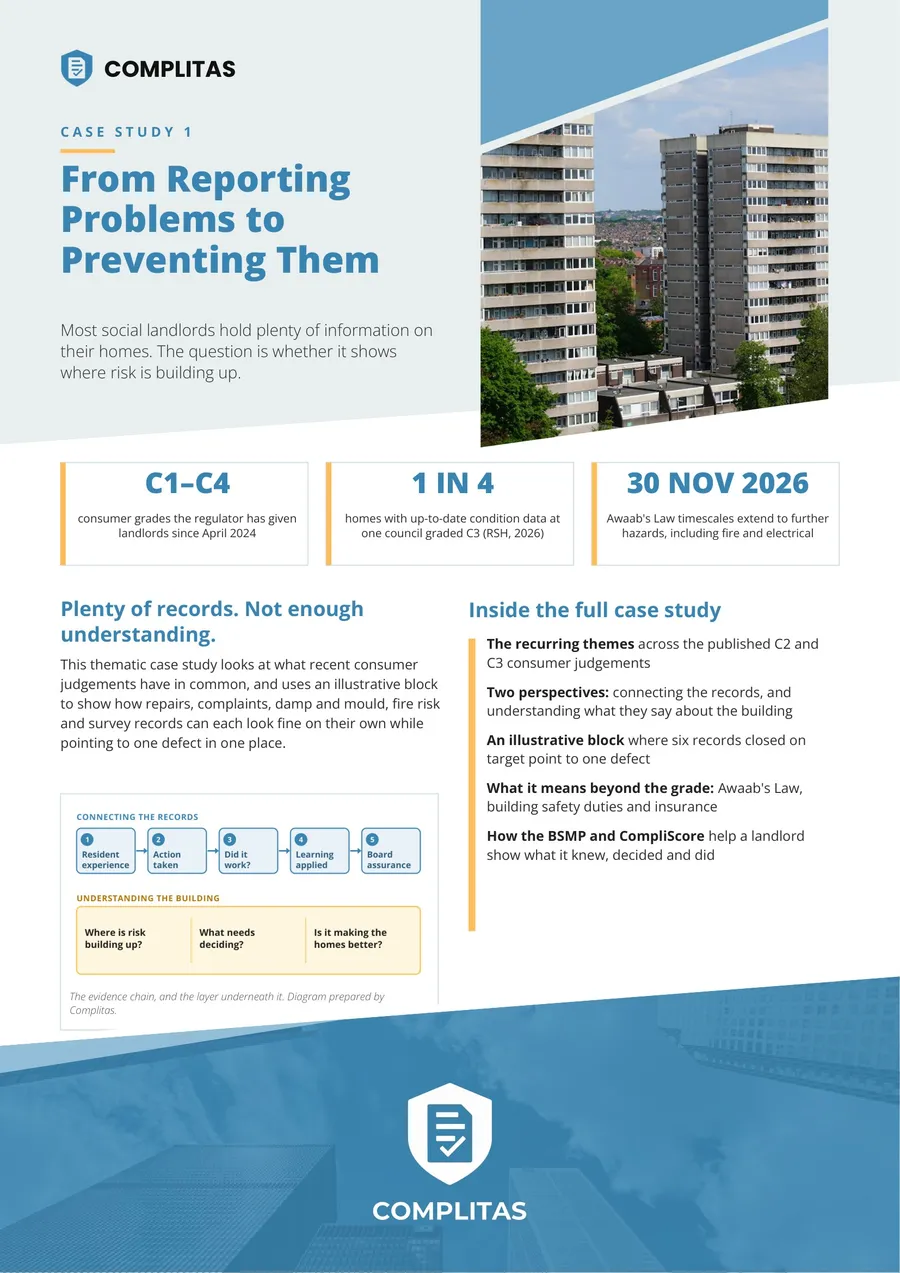
What recent social housing consumer judgements suggest about the gap between holding information on a building and understanding the condition of the building itself.
Joined-up records help a landlord show what it knew and what it did, and act before a recurring defect becomes a hazard, a claim or a lower grade.
The challenge
Recent consumer judgements return to the same themes: incomplete knowledge of what condition homes are in, repairs that need doing twice, hazards left open too long, and board reporting with gaps in it. Most landlords hold plenty of information. It often sits in separate places.
The solution
An evidence chain that ties each record to the building it describes, and an evidenced rating of risk that shows what is recurring, what has been done and what is still open: a Complitas BSMP and CompliScore.
Key findings
- Most landlords are not short of information: repairs, complaints, stock condition and survey records sit separately.
- The link between what a resident experienced, what was done and whether it worked can break.
- Board reporting with gaps is a recurring finding in C2 and C3 judgements.
Who should read it
Housing associations, Social landlords, Asset managers.
Full case study
10 pages, with sources, a worked example and recommended actions.